


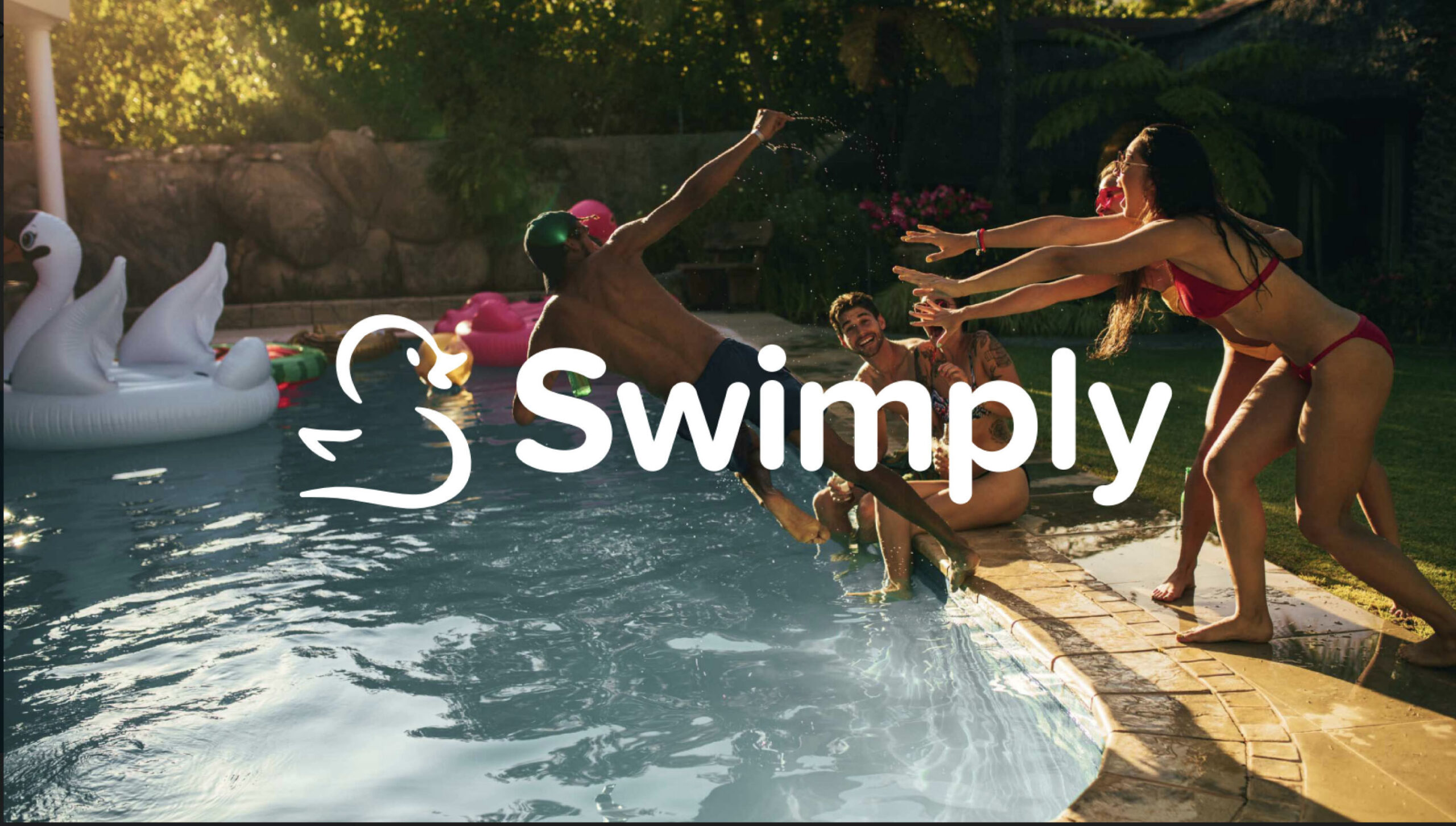
There was a time when having a swimming pool for an afternoon meant knowing someone with a pool, joining a country club, booking a hotel or paying for a full vacation rental.
Swimply changed that idea.
Instead of renting a house for the weekend, the platform lets people rent private pools, backyards, hot tubs, sports courts and other spaces by the hour. That means you can book someone’s pool for two hours, invite your friends or family, and leave when your reservation ends.
It sounds a little unusual the first time you hear about it.
You are essentially paying to use someone else’s backyard.
But the idea has become increasingly popular, particularly in the U.S., Canada and Australia, where private pools and outdoor spaces can be turned into short-term experiences.
Swimply says it is now available in more than 150 cities across the U.S., Canada and Australia, offering pools alongside tennis, pickleball and basketball courts, hot tubs, backyards, event spaces, mansions and other private venues.
The question is whether the experience actually works.
Is Swimply safe?
Are the pools clean?
How much does it cost?
Is it cheaper than a hotel or water park?
What happens if the host cancels?
And perhaps most importantly, is renting someone’s private pool for a few hours actually worth paying for?
We spent time looking at how the platform works, its pricing, booking process, privacy, cancellation rules, host experience and real-world feedback to find out.
What Exactly Is Swimply?
Swimply is essentially an hourly rental marketplace for private spaces.
The concept is similar to Airbnb, but instead of primarily renting somewhere to sleep, you’re renting a place to use for a limited period of time.
The original idea centered around swimming pools.
Today, the platform has expanded into a much broader marketplace.
You can find:
- Private swimming pools
- Heated pools
- Hot tubs
- Backyards
- Tennis courts
- Pickleball courts
- Basketball courts
- Event spaces
- Mansions
- Private homes
- Pet-friendly pools
- Pet parks
Swimply says its platform connects hosts who list spaces with guests who book them, while Swimply itself doesn’t own or manage the properties.
That distinction is important.
When you book a Swimply property, you’re dealing with an individual host and their space.
So the experience can vary considerably from one listing to another.
The Basic Idea Is Surprisingly Simple
Imagine it’s a hot Saturday afternoon.
The public pool is crowded.
Your local hotel doesn’t have day passes.
You don’t want to spend $300 on a vacation rental just to swim for a few hours.
You open Swimply.
Search for pools near you.
Filter by:
Price → Date → Time → Pool type → Amenities
You find a private backyard pool for $45 an hour.
You book two hours.
The host sends the check-in instructions.
You arrive, use the pool and leave when the booking ends.
That’s basically the entire concept.
Swimply’s current guide says rentals can start at around $25 per hour, although actual prices can exceed $100 per hour depending on the property, location and amenities. It says average private-pool bookings are around $45 an hour.
And because you’re paying for the space rather than individual admission tickets, the economics can become more interesting as your group gets larger.
How Does Swimply Work?
The booking process feels familiar if you’ve ever used Airbnb or another peer-to-peer marketplace.
Step 1: Search
Enter your location and choose what you’re looking for.
For example:
Private pool
Hot tub
Tennis court
Pickleball court
Backyard
Step 2: Choose a Date and Time
Unlike a hotel, you’re not booking overnight accommodation.
You select the specific hours you want.
A typical pool reservation might be two or three hours.
Step 3: Compare Listings
This is where you’ll want to spend some time.
Look at:
- Photos
- Hourly price
- Reviews
- Guest capacity
- Amenities
- Pool dimensions
- Heating
- Restroom availability
- Parking
- Privacy
- House rules
- Cancellation policy
Step 4: Book
Once you’ve selected a listing and time, you complete the reservation through Swimply.
Step 5: Check In
The host provides instructions for accessing the space.
Some hosts may be present.
Others provide self-check-in.
Step 6: Enjoy the Space
Use the venue during your reserved hours and follow the host’s rules.
It’s simple—and that’s probably the platform’s biggest strength.
How Much Does Swimply Cost?
This is where things get interesting.
There isn’t one standard Swimply price.
The host determines the hourly rate, and the final amount can change depending on:
- Location
- Pool size
- Amenities
- Day of week
- Time of day
- Number of guests
- Event type
- Seasonal demand
Swimply currently says listings can start around $25 per hour, while some premium spaces cost more than $100 per hour. Its own recent guide puts average private-pool bookings at approximately $45 per hour.
So you might find:
$30/hour — Simple backyard pool
$50/hour — Heated pool with lounge area
$75/hour — Large pool with hot tub and outdoor kitchen
$125+/hour — Luxury property with premium views and amenities
A current Swimply listing in New Jersey, for example, advertises a private pool with Manhattan views at $125 per hour, allowing up to 30 guests and offering amenities including a private restroom and parking.
The range is huge.
That’s actually a good thing.
You don’t have to book a luxury property.
Is Swimply Cheaper Than a Hotel?
Sometimes.
Let’s say you’re a group of six friends.
A hotel day pass might cost $40 per person.
That’s:
6 × $40 = $240
A private Swimply pool might cost:
$60/hour × 3 hours = $180
Even after applicable fees and taxes, the private pool could still work out cheaper.
But if you’re only two people, the calculation changes.
For a couple:
$60 × 2 hours = $120
A hotel day pass might be cheaper.
This is why Swimply makes the most financial sense for small groups rather than solo users, although some people are happy to pay the premium simply for privacy.
You’re Paying for Privacy, Not Just a Pool
This is probably the most important thing to understand about Swimply.
You aren’t simply buying swimming time.
You’re buying private space.
That’s a major difference from a public pool.
You don’t have:
- Crowded lanes
- Children running around
- Strangers sitting beside you
- Loud public speakers
- Long lines
- Limited seating
Instead, depending on the listing, you might have the entire backyard to yourself.
For families with young children, couples, small groups and people who simply don’t like crowded public pools, that’s a significant advantage.
What Are Swimply Pools Actually Like?
This is where the marketplace model becomes both interesting and unpredictable.
Some listings are basic.
You might get:
Pool + a few chairs + restroom access
And that’s it.
Other listings are almost resort-like.
You might find:
- Heated pool
- Hot tub
- Outdoor kitchen
- Fire pit
- Lounge furniture
- Speakers
- Pool toys
- Changing area
- Private bathroom
- Beautiful landscaping
- Sports facilities
The difference between listings can be enormous.
That’s why the photos and reviews matter so much.
Don’t assume that a $40 pool and a $100 pool are essentially the same.
You’re often paying for the overall environment, not simply the water.
Swimply for Birthday Parties and Small Events
This is where the platform becomes particularly useful.
A private pool can be a much easier venue for a small birthday celebration than renting a full event space.
You can potentially organize:
- Birthday parties
- Family gatherings
- Pool parties
- Date nights
- Small celebrations
- Photo shoots
- Team events
- Wellness days
- Kids’ activities
Some listings allow significantly larger groups.
But you need to check the maximum guest count and event rules before booking.
Never assume that a listing allowing six swimmers automatically allows 25 people to attend a birthday party.
The host controls the rules for their property.
Swimply for Families
Families may be one of the platform’s best use cases.
Public pools can be stressful with young children.
A private pool gives parents much more control over the environment.
You can bring your own snacks, choose your own music where permitted and take breaks without worrying about other swimmers.
The privacy can also make the experience less intimidating for children who aren’t confident swimmers.
But parents shouldn’t mistake private for risk-free.
A private pool is still a swimming pool.
Adult supervision remains essential.
Check the pool depth, access points, fencing and host rules before allowing children to swim.
What About Pets?
Swimply has also expanded into pet-friendly experiences.
Some hosts specifically allow dogs, while certain listings are designed around pet swimming or private pet spaces.
This is an unusual feature that traditional hotel pools obviously don’t provide.
But pet rules vary by listing.
Always check whether:
Dogs are allowed
Dogs can enter the pool
Multiple pets are permitted
There is an additional fee
Pets can access the surrounding yard
Never assume that a pet-friendly property allows your dog in the pool itself.
How Private Is Swimply?
This is one of the questions you should ask before booking.
A listing can be described as private, but the exact experience depends on the property.
Some hosts aren’t home during the booking.
Others may remain on the property.
Swimply’s host information says hosts can choose whether to be present, and its current materials state that around 70% of hosts are home during bookings.
That doesn’t necessarily mean you’ll be sharing the pool.
The host may remain inside the house while guests use the designated outdoor area.
Still, if complete privacy matters to you, read the listing carefully and message the host before booking.
Ask directly:
Is the pool completely private during our reservation?
That’s a much better approach than assuming.
Swimply Safety: Should You Be Comfortable Using Someone’s Backyard?
This is probably the biggest hesitation for first-time users.
You’re entering a private property belonging to someone you don’t know.
Swimply says hosts are verified and offers protection programs for eligible bookings. Its host information currently advertises up to $1 million in general liability protection and $10,000 in property protection per occurrence under its protection program.
However, Swimply’s terms also make an important distinction: Swimply is a marketplace and does not own, control or manage the listed venues, and it says it is not an insurer.
That’s important.
Don’t interpret a platform protection program as meaning every possible accident or loss is automatically covered.
Read the applicable terms.
And for guests, basic safety still matters.
What Should You Check Before Booking?
Don’t just look at the pool photograph.
Check the listing for:
Pool Condition
Look for recent reviews mentioning cleanliness and maintenance.
Pool Depth
This matters especially if children are attending.
Restroom
Not every property provides convenient restroom access.
Parking
Find out how many cars can be parked and where.
Privacy
Ask whether the host or other people will be present.
Guest Limit
Don’t exceed the listed maximum.
Music Rules
Some neighborhoods have strict noise rules.
Food and Drinks
Check whether glass, alcohol or grilling is allowed.
Weather Policy
Outdoor bookings can become complicated if there’s bad weather.
Swimply Cancellation Policy
Cancellation isn’t completely standardized across every booking.
According to Swimply’s current terms, the refund amount depends on the cancellation policy associated with the booking.
That means you need to look at the individual listing before paying.
Some listings offer free cancellation until a specified period before the booking.
Others can have stricter conditions.
Service fees may also be treated differently from the actual venue fee.
So don’t assume that cancelling a booking automatically means you’ll receive every dollar back.
What If the Host Cancels?
This is one of the situations where marketplace platforms become complicated.
A host cancellation can be particularly frustrating if you’ve already organized:
- Friends
- Children
- Food
- Transportation
- Decorations
Recent customer feedback includes reports of last-minute cancellations and frustration around refunds or credits, although these are individual experiences rather than evidence that every Swimply booking will have the same problem.
The safest approach is to keep your booking confirmation and any communication with the host.
If something goes wrong, contact Swimply support promptly through the platform.
Swimply Premium Pass
For people who book frequently, Swimply offers a paid subscription called Premium Pass.
According to the current terms, Premium Pass costs $19.99 per month.
The listed benefits include:
- Waived service fees on eligible bookings under $250
- Reduced service fees on bookings above $250
- Premium Credits
- Member-only promotions
- Priority support
The exact terms and benefits are subject to change.
The subscription therefore makes more sense for frequent Swimply users than someone booking a private pool once a year.
Is Swimply Premium Worth It?
Let’s use a simple example.
Suppose you make several qualifying bookings during the month and normally pay substantial service fees.
A $19.99 subscription could potentially pay for itself.
But if you only make one small booking, the math may not work.
There’s no reason to subscribe simply because you’re planning one pool day.
For occasional users, standard booking is probably simpler.
For frequent users, calculate your typical service fees before deciding.
Swimply Customer Experience
The experience can vary considerably.
When the host is responsive, the property matches the photos and check-in is simple, Swimply can feel almost magical.
You find a beautiful private pool, arrive, swim and leave.
No membership.
No long-term commitment.
No hotel room.
No crowded public facility.
But marketplace services also have a downside.
You’re dealing with individual property owners.
That means:
Host communication can vary.
Property maintenance can vary.
Rules can vary.
Privacy can vary.
Recent customer reviews show plenty of positive feedback about the booking process and facilities, but also complaints involving maintenance and occasional booking problems.
That’s exactly why researching the listing matters.
Swimply vs Hotel Pool Day Pass
This is probably the most useful comparison.
| Feature | Swimply | Hotel Day Pass |
|---|---|---|
| Privacy | ⭐⭐⭐⭐⭐ | ⭐⭐ |
| Flexibility | ⭐⭐⭐⭐⭐ | ⭐⭐⭐ |
| Group Value | ⭐⭐⭐⭐⭐ | ⭐⭐⭐ |
| Amenities | Depends on listing | ⭐⭐⭐⭐⭐ |
| Consistency | ⭐⭐⭐ | ⭐⭐⭐⭐⭐ |
| Price | Varies | Varies |
| Private Space | Usually | Rarely |
| Booking Length | Hourly | Usually Day-Based |
If you want a predictable resort experience, a hotel may be better.
If you want privacy, Swimply wins.
Swimply vs Public Pool
The comparison is even clearer.
A public pool is usually cheaper.
But you’re sharing the space with everyone else.
Swimply is essentially the opposite.
Public pool = lower cost, less privacy
Swimply = higher cost, more privacy
If you’re bringing a large family or group of friends, the per-person cost can become reasonable.
Swimply Pros and Cons
Pros
- Private pools available by the hour
- No overnight stay required
- More privacy than public pools
- Useful for families and groups
- Pools available in many different price ranges
- Hot tubs and sports courts available
- Some listings offer luxury amenities
- Pet-friendly options available
- Useful for small parties and events
- Same-day bookings available on some listings
- Reviews help compare hosts and properties
- Hosts can offer self-check-in
- Available across many U.S., Canadian and Australian cities
Cons
- Quality varies significantly between listings
- Some hosts may be present during bookings
- Service fees increase the final price
- Cancellation rules vary
- Outdoor bookings depend on weather
- Last-minute host cancellations can be frustrating
- Pool safety and maintenance depend heavily on the property
- Premium listings can become expensive
- Not every listing offers a restroom or parking
How to Get the Most From Swimply
If you’re trying Swimply for the first time, don’t simply choose the cheapest pool.
A little research can make a huge difference.
Read Recent Reviews
Look for comments about cleanliness, host communication and whether the property matched the photos.
Check the Guest Limit
Especially important for parties.
Confirm Privacy
Ask whether the host will be home.
Check the Pool Depth
Important for families with children.
Look at the Amenities
A $70 pool with a hot tub, grill, lounge area and private bathroom may be better value than a $45 pool with nothing else.
Check the Cancellation Policy
Outdoor plans can change quickly.
Confirm Weather Rules
Ask what happens if heavy rain or unsafe weather makes the pool unusable.
Message the Host
A quick question before booking can prevent a major misunderstanding.
Who Is Swimply Actually For?
Swimply isn’t designed to replace hotels or public swimming pools.
It’s solving a different problem.
It’s for people who want temporary access to a private space.
That makes it particularly appealing for:
Families
Private swimming without a crowded public pool.
Couples
A quiet afternoon, date or relaxing private space.
Friend Groups
Split the hourly cost across several people.
Birthday Parties
A private venue without renting a full event space.
Pet Owners
Certain listings allow private swimming experiences for dogs.
Athletes
Private tennis, pickleball and basketball courts can be booked without a traditional club membership.
Content Creators
Some properties can work as locations for photography or video shoots, subject to host rules.
Is Swimply Worth It in 2026?
Yes—but only if you value privacy.
That’s the key to understanding Swimply.
If your only goal is to swim as cheaply as possible, a public pool will probably win.
If you want a resort experience, a hotel day pass may provide more amenities.
But if you want a private pool for two or three hours with your family or friends, Swimply can be difficult to beat.
The platform essentially lets you turn someone else’s unused backyard into your temporary private resort.
Prices start around $25 per hour, according to Swimply, although premium properties can cost well over $100 per hour.
That means there are options for different budgets.
The real challenge is finding a listing that matches the description, photos, privacy expectations and amenities.
Do that research, and the experience can be excellent.
Final Verdict
⭐ Swimply Overall Rating: 4.5/5
Our Verdict: Recommended for private experiences
Swimply is one of those services that sounds strange until you actually understand why people use it.
You’re not really renting a swimming pool.
You’re renting privacy, convenience and a few hours of having your own space.
That’s valuable.
For a family trying to avoid a crowded public pool, a group planning a birthday party or friends wanting a private afternoon together, the platform makes a lot of sense.
The biggest weakness is the marketplace model.
One listing can be fantastic while another can be disappointing.
The host, property, rules and maintenance all matter.
So don’t book based solely on the first attractive photograph you see.
Read the reviews.
Check the guest limit.
Confirm privacy.
Understand the cancellation policy.
And ask questions before paying if anything is unclear.
If you do that, Swimply is absolutely worth trying in 2026.
Frequently Asked Questions
What is Swimply?
Swimply is a marketplace that lets people rent private spaces by the hour, including swimming pools, hot tubs, backyards, sports courts and event spaces.
How much does Swimply cost?
Prices vary by property, location and amenities. Swimply currently says rentals can start around $25 per hour, while premium properties can cost more than $100 per hour.
Is Swimply cheaper than a hotel?
It can be, particularly for groups sharing the hourly cost. However, the total price depends on the listing and service fees.
Is Swimply safe?
Swimply provides platform protections for eligible bookings and says hosts are verified, but the company also states that it does not own or manage the properties. Guests should read the listing, rules and applicable protection terms carefully.
Are Swimply pools private?
Many are, but privacy depends on the individual listing. Some hosts may remain at home during your booking. Check the listing and ask the host if complete privacy is important.
Can I book a Swimply pool for a party?
Yes, some properties allow parties and larger groups. Always check the guest limit and event rules before booking.
Can I bring my dog to Swimply?
Some hosts allow pets, and Swimply offers pet-friendly listings in certain markets. Check the individual property’s pet rules before booking.
Can I book a Swimply pool for just one hour?
Yes. Swimply is designed around hourly rentals, although individual hosts may have minimum booking periods.
Does Swimply offer hot tubs?
Yes. Hot tubs are among the private spaces and amenities available through the platform.
Can I rent a tennis or pickleball court on Swimply?
Yes. Swimply has expanded beyond pools and offers private tennis, pickleball and basketball courts in supported locations.
Does Swimply have a membership?
Yes. Swimply currently offers an optional Premium Pass for $19.99 per month with eligible booking fee benefits, credits, promotions and priority support.
Does Swimply offer same-day bookings?
Yes, some listings support Instant Book, allowing eligible spaces to be booked on the same day. Availability depends on the host and property.
Is Swimply worth it?
If privacy is important to you, yes. Swimply is particularly useful for families, couples and groups that want a private pool or outdoor space for a few hours without paying for an overnight vacation rental.
